Rolling with Leftover Spaghetti
- Dace McNally

- Aug 29, 2024
- 3 min read
Updated: Mar 12, 2025
I usually text Max 1-2 times a week with a new idea for a game. It’s a curse, really—I can never turn my brain off, and I’m quick to excite, so if I’m inspired, I’ll drop whatever I’m doing to catch the idea before it floats off. Otherwise, it’s never to be seen again.
Max and I have been making and playing games together for over five years now, so he knows that when I’ve got spaghetti in my hand, I don’t throw it at a wall; I throw it at him because he’s a pragmatist, business-minded, and all the other things that send shivers down my spine.
Late last summer, we were in the corporate trenches, knee-deep in developing a can of worms I’ll call “The Kids’ RPG."
Max was busy selling the game when I had just been tasked with making a version playable by preschool-aged children. I had only three weeks to do it, which involved overhauling the entire system and rewriting ten of our adventures to accompany it.
Mind you, the only real challenge from this was making the current combat system suitable for a three-year-old. It wasn't impossible, but it would require lots of spaghetti throwing.
One of my ideas was just a collection of further simplifications on our already simple combat system, but my other idea was an entirely fresh take.
However, when I presented them to Max, he liked the first and slammed the other because it diverged too much from the preexisting mechanics, and the tight timetable left us no room for play-testing.
But I couldn’t shake it. I remember driving home from work, saying, “So what of this leftover spaghetti, Dace?"
Well, I decided to roll with it.
I give you Table Fables.


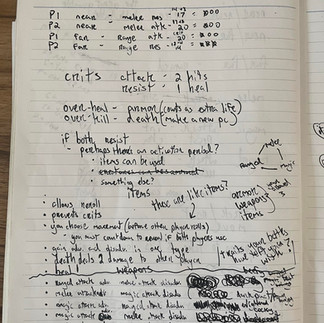


Summary:
Three types of attacks: Melee, Magic, and Ranged.
Ability scores determine effectiveness in making and resisting attacks:
Strength (Melee Attack)
Constitution (Melee Resist)
Dexterity (Ranged Attack)
Wisdom (Ranged Resist)
Intelligence (Magic Attack)
Charisma (Magic Resist)
Distance between characters is either "near" or "far."
Movement in combat is simply choosing to move “near” a target or "far" from it.
Melee attacks require both attacker and target to be “near”
Ranged attacks require both attacker and target to be “far”
Magic attacks require the attacker to be the opposite distance of their target
To attack, roll a d20+ability. The target then rolls a d20+ability to defend. If the defender’s roll is equal to or greater than the attacker’s, they resist the attack. Otherwise, the attacker scores a hit.
After running myself through mock battles for around two hours, it became increasingly clear that it wasn’t just a combat system---it was a game! And when my brother came home from work and played it with me for another hour, I discovered that it wasn’t just a game but a good one.
However, I had another job to do in the end, so I put "Table Fables" aside. But the following winter presented Max and me with a difficult transition from our corporate life and a golden opportunity. In short, we had to push our first babe from the nest, which forced us to look toward the future, but in doing so brought us to this:

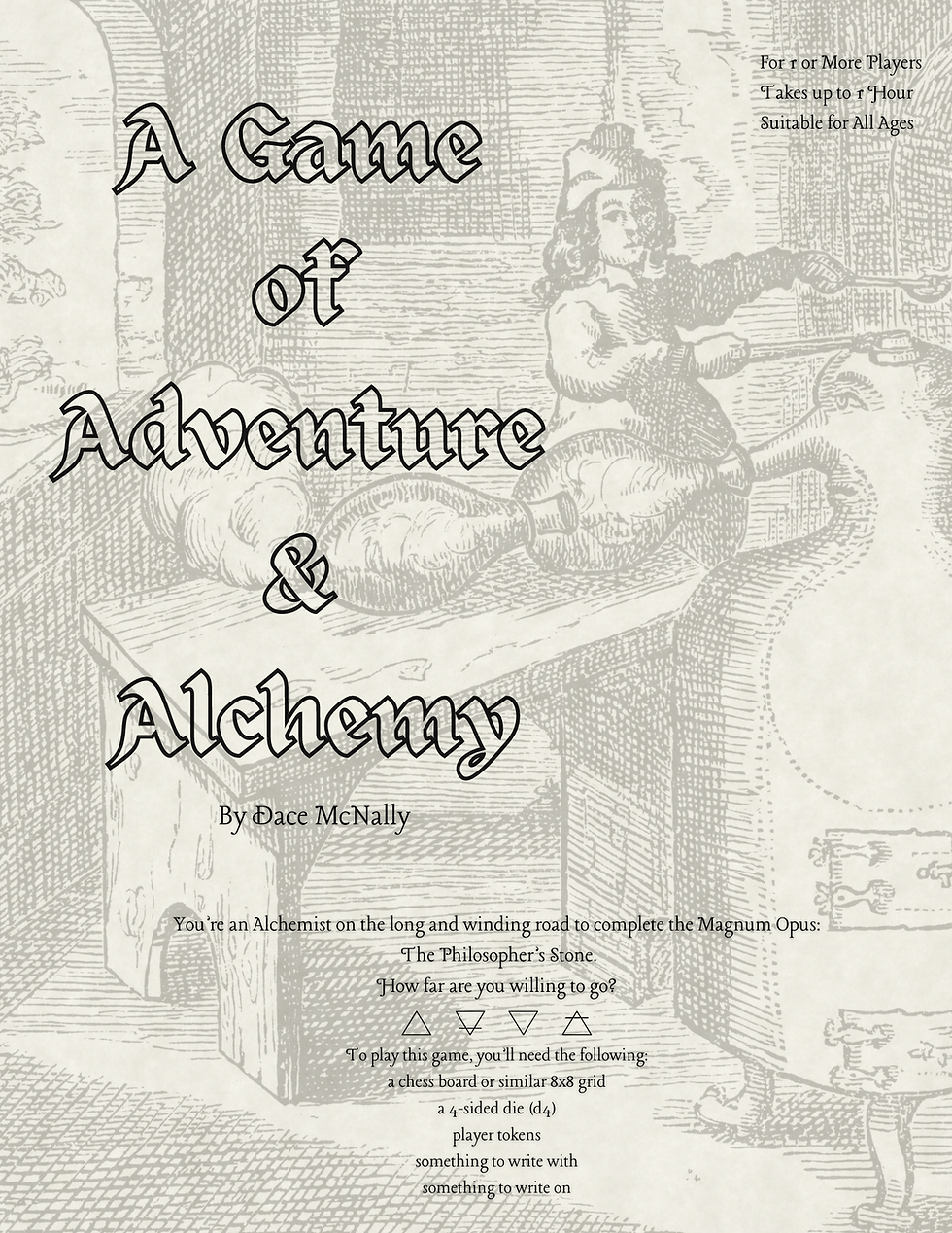
Our very own game company! Can you guess what our first published game might be?
Comments